
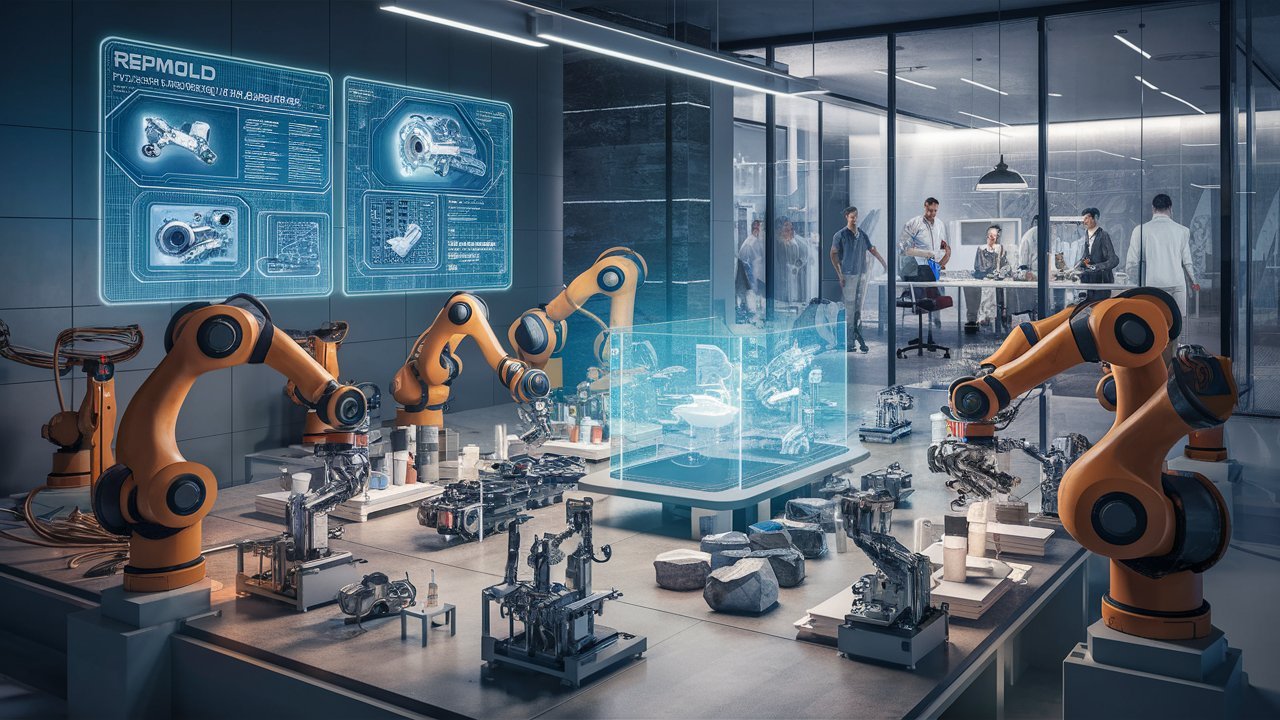
Repmold is a term that represents the cutting-edge evolution of manufacturing technology, particularly in the field of precision molding and industrial design. As industries continue to advance, the demand for high-quality, durable, and efficient molded components has grown exponentially. Repmold stands at the forefront of this transformation, combining innovation, engineering excellence, and sustainability to redefine how molds are designed, produced, and utilized. Whether in automotive, aerospace, medical, or consumer goods manufacturing, Repmold symbolizes a new era of precision, efficiency, and technological integration. This article explores the meaning of Repmold, its applications, benefits, and its growing influence in the global manufacturing landscape.
What Is Repmold?
Repmold refers to a modern approach to mold manufacturing that emphasizes precision, efficiency, and sustainability. It combines advanced materials, digital design tools, and automated production systems to create molds that meet the highest standards of quality and performance. The term can also represent a company or technology specializing in mold design and replication, focusing on reducing production time and improving product consistency. Repmold technology is used across multiple industries, including automotive, electronics, medical devices, and consumer goods, where precision and durability are critical. By integrating computer-aided design (CAD), 3D printing, and smart manufacturing systems, Repmold has revolutionized how molds are conceptualized and produced.
The Evolution of Molding Technology
The journey toward Repmold innovation began with traditional mold-making techniques that relied heavily on manual craftsmanship. While these methods produced functional molds, they were time-consuming and prone to human error. The introduction of computer-aided manufacturing (CAM) and CNC machining marked a turning point, allowing for greater accuracy and repeatability. Repmold builds upon these advancements by incorporating automation, robotics, and digital simulation into every stage of production. This evolution has led to faster turnaround times, reduced waste, and improved product quality. The shift from conventional to Repmold technology represents a broader trend in manufacturing — one that prioritizes precision, sustainability, and adaptability in an increasingly competitive global market.
How Repmold Works
The Repmold process integrates several advanced technologies to ensure optimal performance and efficiency. It begins with digital modeling, where engineers use CAD software to design molds with exact specifications. These designs are then tested through virtual simulations to predict performance under real-world conditions. Once validated, the mold is produced using high-precision machinery or additive manufacturing techniques such as 3D printing. Repmold systems often employ automated quality control tools, including laser scanning and AI-driven inspection, to ensure every mold meets strict standards. The result is a product that combines accuracy, durability, and cost-effectiveness — essential qualities for modern manufacturing.
Key Features of Repmold
The features of Repmold distinguish it from traditional mold-making methods. One of its most notable features is digital precision, achieved through advanced design and simulation tools. Another key feature is automation, which reduces manual labor and minimizes production errors. Material innovation is also central to Repmold, with the use of high-performance alloys, composites, and polymers that enhance mold longevity. Additionally, Repmold emphasizes sustainability, incorporating eco-friendly materials and energy-efficient processes. The integration of smart manufacturing systems allows real-time monitoring and predictive maintenance, ensuring consistent quality and reducing downtime. These features collectively make Repmold a benchmark for modern industrial excellence.
Benefits of Repmold Technology
The benefits of Repmold extend across multiple dimensions of manufacturing. For businesses, it offers significant cost savings by reducing material waste, labor expenses, and production time. The precision of Repmold technology ensures consistent product quality, minimizing defects and rework. Its adaptability allows manufacturers to produce complex designs that were previously difficult or impossible to achieve. Repmold also supports sustainability goals by optimizing resource usage and reducing carbon emissions. For industries such as automotive and aerospace, where precision and reliability are paramount, Repmold provides a competitive edge through innovation and efficiency. Ultimately, it represents a smarter, faster, and greener approach to manufacturing.
Applications of Repmold in Industry
The versatility of Repmold makes it applicable across a wide range of industries. In the automotive sector, it is used to produce components such as dashboards, bumpers, and engine parts with high dimensional accuracy. In electronics, Repmold enables the creation of intricate casings and connectors that require micro-level precision. The medical industry benefits from Repmold’s ability to produce sterile, biocompatible molds for devices and instruments. In consumer goods, it allows for mass production of durable and aesthetically pleasing products. The aerospace industry leverages Repmold for lightweight, high-strength components that meet rigorous safety standards. This cross-industry adaptability underscores Repmold’s role as a cornerstone of modern manufacturing.
Repmold and Sustainability
Sustainability is a defining characteristic of Repmold technology. Traditional mold-making processes often generate significant waste and consume large amounts of energy. Repmold addresses these challenges through eco-conscious design and production methods. By using recyclable materials, optimizing energy consumption, and reducing scrap rates, Repmold contributes to a more sustainable manufacturing ecosystem. Additionally, digital simulations minimize the need for physical prototypes, further conserving resources. Many Repmold systems also incorporate closed-loop recycling, where waste materials are reprocessed into new molds. This commitment to sustainability aligns with global efforts to reduce industrial carbon footprints and promote responsible production practices.
Why Repmold Stands Out
What makes Repmold unique is its holistic approach to innovation. It does not merely improve existing processes but redefines them through technology integration and forward-thinking design. Repmold stands out for its ability to combine precision engineering with environmental responsibility, offering solutions that are both efficient and sustainable. Its adaptability across industries and scalability for different production volumes make it a versatile choice for manufacturers worldwide. Moreover, Repmold’s emphasis on digital transformation positions it as a leader in the Industry 4.0 revolution, where automation, data analytics, and connectivity drive industrial progress.
Conclusion
Repmold represents the future of manufacturing — a future defined by precision, innovation, and sustainability. By merging advanced technologies with intelligent design, it has transformed the way molds are created and utilized across industries. Repmold’s impact extends beyond efficiency; it embodies a commitment to quality, environmental responsibility, and continuous improvement. As global industries evolve, Repmold stands as a symbol of progress, proving that the fusion of technology and craftsmanship can lead to smarter, cleaner, and more efficient production systems. In the era of digital manufacturing, Repmold is not just a process — it is a revolution shaping the future of industrial excellence.
Frequently Asked Questions (FAQ)
1. What is Repmold?
Repmold is an advanced molding technology that integrates digital design, automation, and sustainable practices to produce high-precision molds for various industries.
2. How does Repmold differ from traditional mold-making?
Unlike traditional methods, Repmold uses digital modeling, AI-driven inspection, and automated production to achieve greater accuracy, speed, and efficiency.
3. What industries use Repmold technology?
Repmold is widely used in automotive, aerospace, electronics, medical, and consumer goods manufacturing.
4. Is Repmold environmentally friendly?
Yes. Repmold emphasizes sustainability through energy-efficient processes, recyclable materials, and waste reduction.
5. What materials are used in Repmold production?
Repmold utilizes advanced materials such as high-performance alloys, composites, and polymers designed for durability and precision.
6. Can Repmold be customized for specific applications?
Absolutely. Repmold systems are highly adaptable and can be tailored to meet the unique requirements of different industries and products.
7. How does Repmold improve production efficiency?
By automating processes and using digital simulations, Repmold reduces production time, minimizes errors, and enhances overall productivity.
8. Is Repmold part of Industry 4.0?
Yes. Repmold aligns with Industry 4.0 principles, integrating smart manufacturing, data analytics, and automation for optimized performance.
9. What are the cost benefits of using Repmold?
Repmold reduces material waste, labor costs, and rework expenses, resulting in significant long-term savings for manufacturers.
10. What is the future of Repmold technology?
The future of Repmold lies in further automation, AI integration, and sustainable innovation, driving the next generation of intelligent manufacturing systems.
